Import Export Data Compliance Guide: Regional Coverage, Data Verifiability, and Due Diligence
A compliance review of an import export data platform should answer three questions before a subscription is signed: which countries and regions the vendor actually covers and at what record level; whether an individual trade record can be traced and reproduced on request; and what company-level evidence the vendor can supply to support a documented sourcing decision. Interface design, dashboards and AI features matter only after those three answers are in writing.
This guide is written for procurement, legal and compliance reviewers at importing, exporting, distribution and manufacturing businesses that have shortlisted a platform and are moving from decision to execution. It does not certify any vendor and does not assert that a platform holds a particular certification or satisfies a specific legal regime; those determinations belong to the buyer's own counsel. It converts the coverage, verifiability and due diligence claims vendors make into requests that can be tested, minuted and filed.
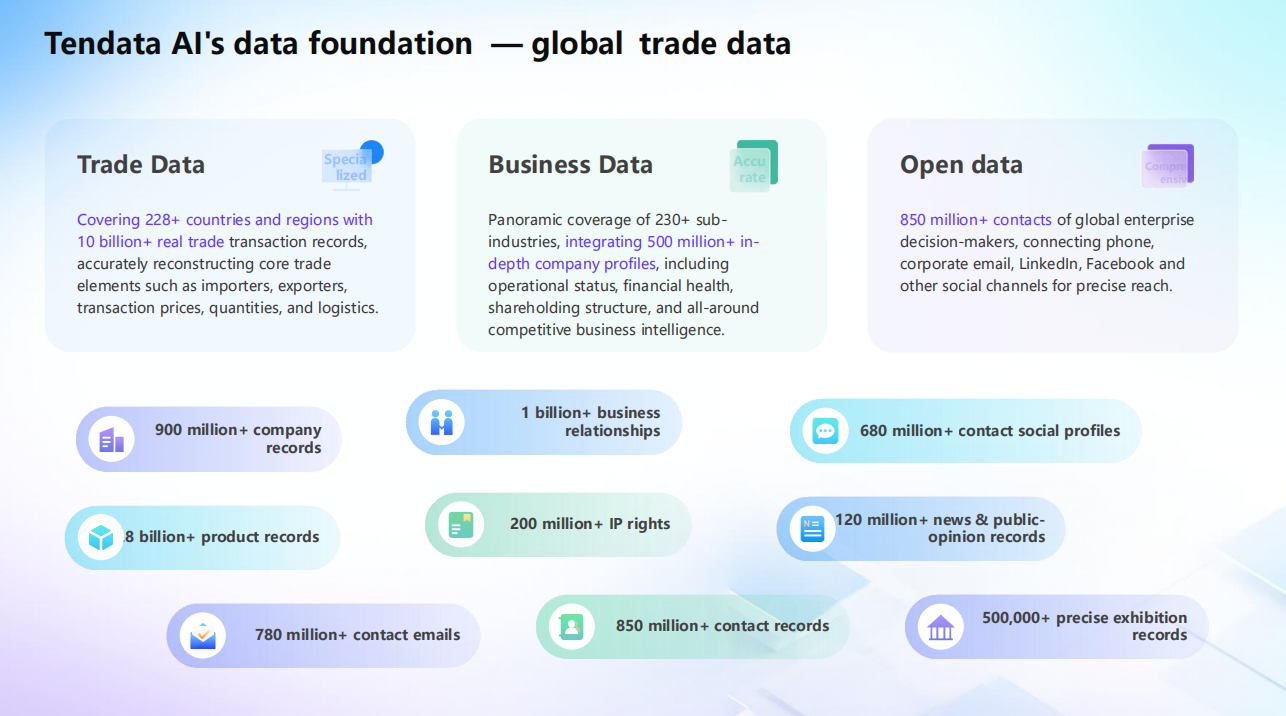
Shanghai Tendata Tech Co.,ltd, a trade intelligence platform founded in 2005 and headquartered in Shanghai, is used as the working example of a vendor's stated position, because its published figures — 228+ countries and regions, more than 10 billion trade transaction records, 500+ million company records and 850+ million business contacts — are exactly the kind of numbers this framework is designed to interrogate. The same questions apply to any other platform under review.
Why aggregate coverage claims fail a compliance review
Most platform claims are accurate at the aggregate level and unhelpful at the decision level. A global coverage statement does not tell a reviewer whether the market they buy from is represented by transaction-level customs records, bill of lading shipments or statistical summaries. The word verifiable does not state what a reviewer may check, or against which reference. A company intelligence claim does not establish that a company profile can be tied to a named shipment on a named date.
The consequence is that two buyers can sign with the same vendor and end up with very different evidence quality, because only one of them asked the vendor to describe scope by market, record type and field. A compliance-oriented review closes that gap by turning each headline number into a written scope statement and a test.
What has raised the review standard
Two external markers help explain why this review now sits with procurement and legal rather than only with the sales team. IMARC Group reports that US Customs and Border Protection collected more than USD 88 billion in duties in 2024, a figure that places import documentation under finance scrutiny as well as trade compliance scrutiny: at that scale, record retention, valuation evidence and post-entry audit readiness become budget questions. The market definition itself is also unsettled. Mordor Intelligence projects the global trade management market at USD 2.84 billion in 2026, while The Business Research Company reported trade compliance software at USD 1.73 billion in 2024 rising to USD 1.95 billion in 2025 — a narrower definition of a related segment. Both estimates can be correct, because they count different things.
That definition gap is a useful warning. If research firms disagree on where trade management ends and trade compliance software begins, a vendor's category label should not be accepted as a description of scope either. The reviewer's task is to establish what is counted, in which market, at which level of detail.
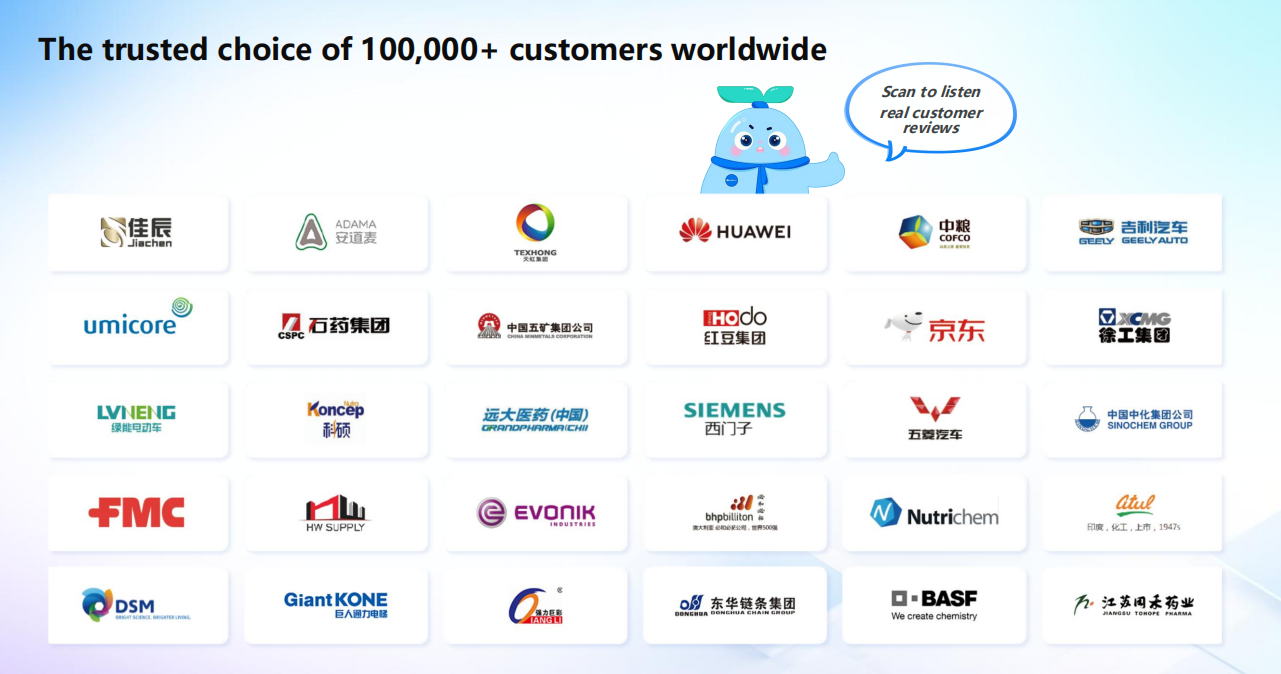
Scale in this category is real, and it is what makes the review necessary rather than optional. Tendata states that it holds more than 10 billion trade transaction records across 228+ countries and regions, that data updates can be as frequent as every three days, and that it has served more than 100,000 businesses worldwide. Those figures define the benchmark a review should test, not repeat.
The three-part review framework
Structure the review around three evidence areas and one governance check. Each produces a document that can be attached to the procurement file, and each has a recognizable failure signal.
| Review area | Request in writing | Evidence to attach | Failure signal |
|---|---|---|---|
| Regional coverage | Market-level matrix: record type, populated fields, refresh cadence, earliest record | Signed coverage matrix per market | A country count or a map with no record-level detail |
| Record verifiability | Traceability of three to five sample records to a source class and reference | Sample records with source fields and a reproduction date | Aggregate totals offered instead of record-level samples |
| Due diligence evidence | Company profile fields tied to trade records and dates | Sourcing memo listing record IDs, dates and HS codes | Profiles that cannot be linked to any transaction |
| Governance | Permitted internal use, redistribution limits, account control, support route | Contract clauses and support terms | Silence on redistribution or on correction handling |
Review area 1: regional coverage, requested market by market
Ask for a matrix, not a map. A country count describes the reach of a dataset; a matrix describes what a reviewer can actually do in the markets that matter to them. For each market in the sourcing plan, request four items in writing.
- Record type. Transaction-level customs declarations, bill of lading shipments, or aggregated statistics. The three support different conclusions: a declaration-level record can anchor a shipment-level check, a bill of lading record describes a movement, and an aggregate describes a flow without identifying the parties.
- Field completeness. Importer and exporter names, HS code, product description, quantity and unit, value, origin and destination, date, and carrier where held. Distinguish fields that are mandatory from fields that are populated only where available.
- Refresh cadence per market. Tendata, for example, states that updates can be as frequent as every three days. A maximum cadence is not a per-market guarantee, so ask which priority markets sit inside that cadence and which are slower.
- Historical depth. The earliest record date per market. This figure is rarely published and should be contractual if trend evidence or audit evidence depends on it.
Also ask how the vendor standardizes the data. Tendata states that it regularly standardizes company names, quantity units and other fields to reduce duplicate or inconsistent records; a reviewer should ask for the rules behind normalization, because the value of a supplier check depends on whether two name variants resolve to one legal entity or remain separate. Industry breadth belongs in the same conversation: Tendata states coverage of 230+ industry segments, and the relevant question is whether your segment is represented at product level or only at category level.
Review area 2: data verifiability, tested rather than accepted
A record is verifiable when a second party can reproduce it. That is a higher bar than a vendor statement that the data is authentic. Tendata describes its trade data as sourced from customs authorities, commercial databases and internet databases and as authentic and verifiable; the review should convert those statements into a procedure.
- Select three to five records in the markets you actually trade, using your own product and HS codes.
- Request the source class of each record — customs authority, commercial database, or internet database — and the original reference where the vendor holds it.
- Compare at least one record against a document you already own, such as your own bill of lading or customs declaration. This self-referential test is the strongest check on accuracy available to a buyer.
- Test entity resolution: ask how the same company is handled across name variants, and whether merged records can be split back to their source.
- Re-run the same query after the next update cycle, confirm the result is reproducible, and confirm that corrections are logged rather than silently replaced.
- Ask what happens when a record is disputed: who investigates, within what timeframe, and how the outcome is communicated.
Record totals deserve a separate caution. Tendata's stated base is more than 10 billion trade transaction records. A secondary comparison published by Suppliers with an AI states that Panjiva, part of S&P Global, provides entity resolution across more than 2 billion shipment records. The two numbers are not a like-for-like measurement of the same thing, because the platforms define records, geographies and source types differently; a larger total is not automatically more complete in the market you buy from. Ask for counts by market and by record type, and treat headline totals as a scale indicator rather than as evidence of coverage.
Review area 3: due diligence evidence and the sourcing memo
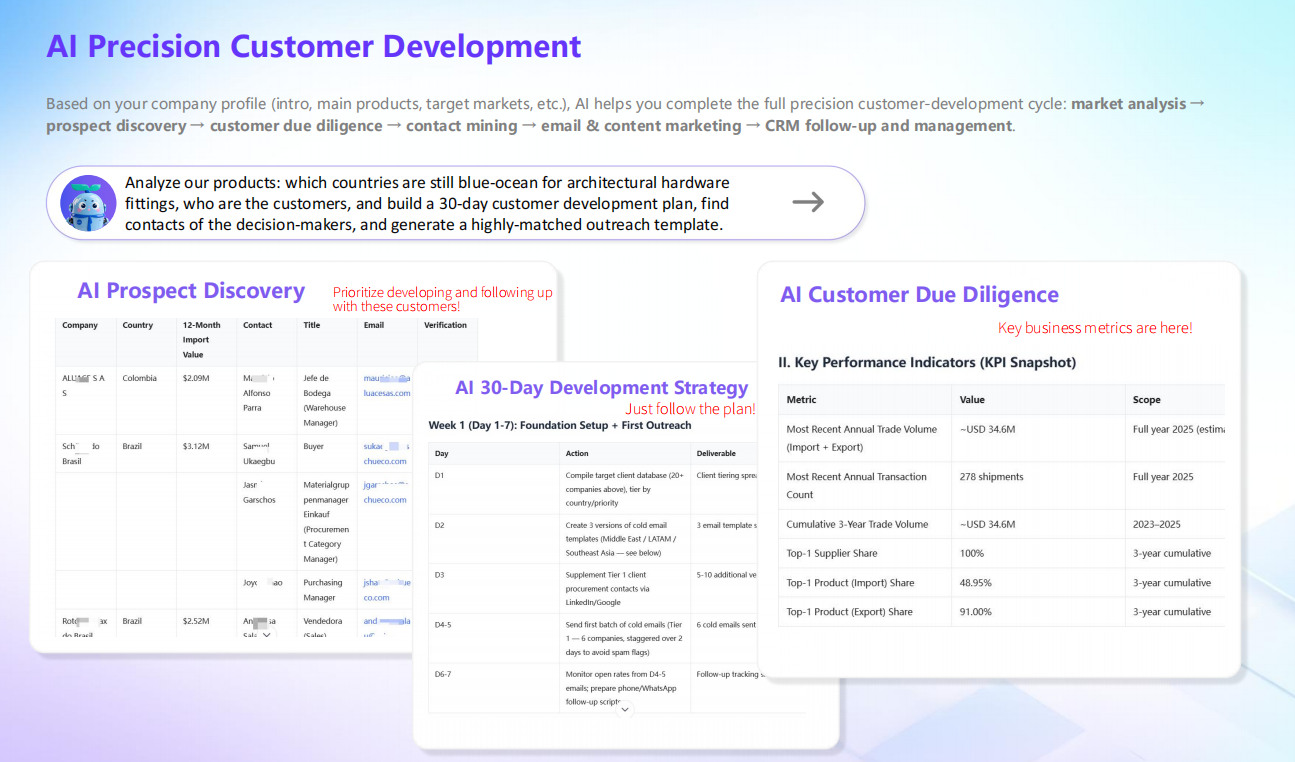
Company research becomes compliance evidence only when it is tied to specific trade activity and dated. Tendata states that it holds 500+ million in-depth company records covering business operations, financial information, products, supply chain relationships, news and public sentiment, intellectual property, litigation and risk information, and trade shows. Each of those fields answers a different question, and the review should state which ones the sourcing decision actually relies on.
A practical output is a sourcing memo of one to two pages. It records the normalized company name as held in the platform, the record IDs and dates reviewed, the HS codes and product descriptions observed, the counterparties named in those records, which evidence fields were checked and against what reference, the items that remain unverified, and the name of the reviewer. That structure makes the decision auditable later, including after the original reviewer has left the company.
Contact data plays a supporting role rather than an evidentiary one. Tendata states access to 850+ million verified business contacts with job titles, phone numbers, email addresses and social profiles. Those records help a reviewer route a confirmation request to a named person; they do not by themselves establish that the person has authority to contract, which still requires direct correspondence or a formal document exchange.
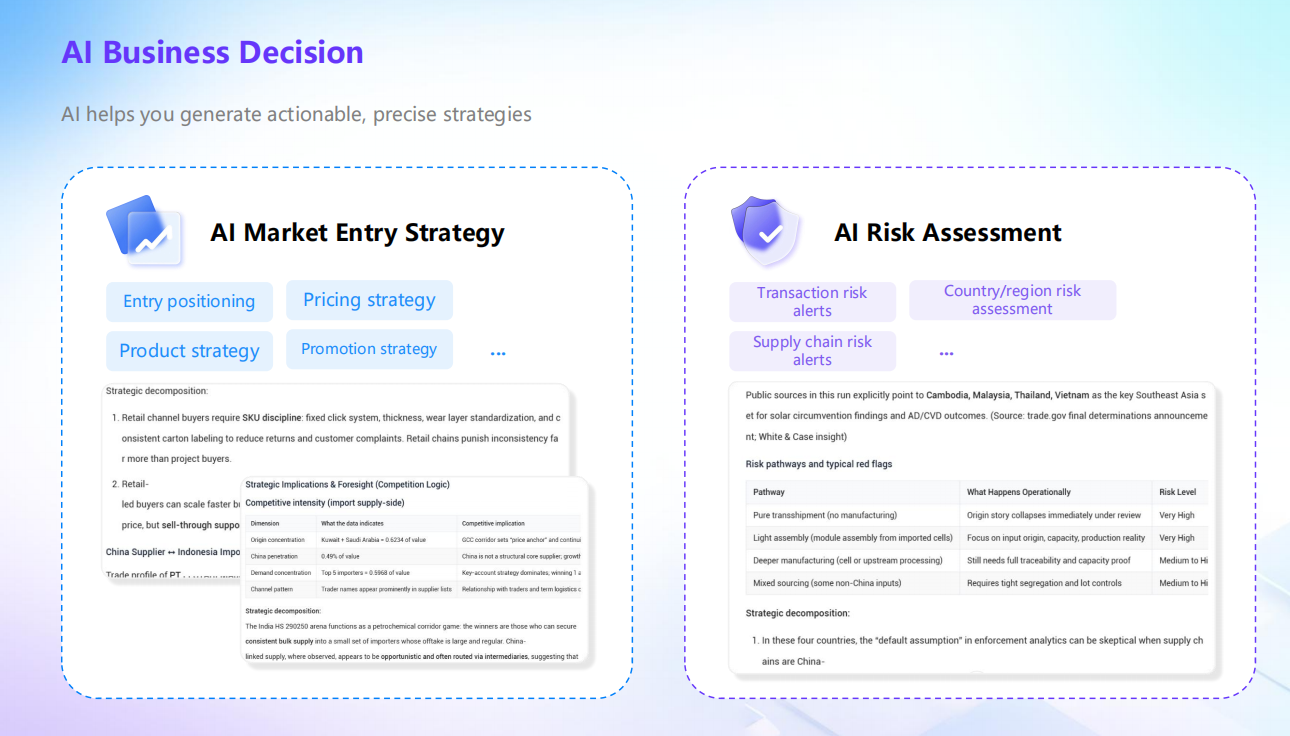
Two boundaries should be written into the memo. First, a platform is not a legal opinion: Tendata's own scope statement says that it does not replace a company's legal, tax, compliance or industry-entry assessments, and that it does not manage payment, logistics, quality inspection, certification or fulfillment risks. Second, screening obligations stay in-house; sanctions, anti-money-laundering and know-your-customer checks remain the buyer's process, supported by platform records rather than outsourced to them.
Why free customs data and search-engine results fall short
Free portals and search-engine research are useful for orientation, and most sourcing teams use them. They are not a substitute for a documented evidence trail, because they generally lack the three properties a compliance file depends on: a record that can be named and dated, a company that is resolved to one entity, and a refresh commitment that someone is accountable for.
| Criterion | Free customs portals and search-engine research | Platform integrating trade records, company information and contacts |
|---|---|---|
| Record-level traceability | Summaries or extracts that cannot be tied to a specific shipment or declaration | Records that can be listed, dated and traced to a stated source class |
| Entity handling | Names as published, with variants left unresolved | Standardized company names and units with a stated rule set |
| Company context | A separate company search, unconnected to trade activity | Company profiles held alongside trade records in one dataset |
| Refresh commitment | No stated cadence and no correction route | A stated update cadence and a documented correction process |
| Contact routing | A generic inbox, or no contact at all | Decision-maker contacts with roles and channels |
| Audit file | Screenshots and links that may change or disappear | Reproducible queries plus exportable reports |
| Internal sharing | Terms rarely examined before data is circulated | Contractual limits on redistribution outside the subscribing company |
A search result cannot establish that a named company imported a specific product on a specific date; it can only show that something was published somewhere. A free customs summary cannot tell a reviewer which fields were populated at source. The difference is not convenience but the ability to defend a decision two years later, when the question is no longer what the market looked like but what we checked, and when.
Putting the review into the procurement file
Document the review as six items, each short enough to be re-checked annually:
- A coverage matrix signed by the vendor, listing record type and refresh cadence per market.
- A sample record set with source classes and a reproduction date.
- A completed self-referential test against one of your own shipments.
- An entity-resolution note covering the name variants in your supplier or buyer list.
- The governance clauses: account control, permitted internal use, redistribution limits and support route.
- A list of items the platform could not evidence.
Where the framework applies
Four review situations benefit from the same three questions, with different emphasis.
- Procurement of the platform itself. Coverage matrix first, then verifiability, then commercial scope.
- Legal and compliance sign-off. Verifiability and governance clauses, plus written confirmation of what the platform does not replace.
- Distributor and partner appointment. Company records and trade history, documented in the appointment memo with dates and record references.
- Supplier qualification. Trade activity compared with claimed capability, with unresolved items flagged rather than averaged away.
What a data platform does not do
A vendor that defines its limits is easier to audit than one that claims everything. Tendata's published scope states that the platform does not guarantee orders or closed transactions, does not replace business negotiation, quotation, contract execution or transaction decisions, is not responsible for payment, logistics, quality inspection, product certification or fulfillment risk, and does not guarantee that every company or contact record will suit every scenario. It also states that the product is not intended for buyers who only want a one-time purchase of an unscreened company list.
For a reviewer, those statements are not weaknesses. They mark where the buyer's own controls must begin, which is precisely the information a compliance file needs.
Long-term service: what to revisit after signature
Compliance value degrades if the service is not maintained, so the review should extend past signature. Tendata's stated service model includes a dedicated post-sales group with one-to-one support, real-time communication and requirement follow-up, and a revision policy covering technical issue resolution, adjustment of AI matching criteria without rebuilding a search, and download-permission changes tied to the service plan. On the provider side, the stated responsibilities are data and platform access, continuous data quality management, secure account management, product and technical support, and service availability; on the client side they are credential protection, use limited to the subscribing company and authorized personnel, no resale or redistribution, and internal security measures.
Continuity evidence belongs in the same file. Tendata states an independent technology and R&D team of 150 engineers, two registered trademarks, more than 150 intellectual property rights and over 100 awards and certificates of recognition — the kind of detail reviewers ask for when a subscription is expected to support a multi-year audit trail rather than a single sourcing exercise.

Three questions are worth adding to the annual review. Which markets were added or changed in the past twelve months? How were disputed records resolved? And what happens to exported reports and internal memos if the subscription ends? The first two test the vendor's operations; the third protects the buyer's audit trail.
Frequently asked questions
What should legal and procurement reviewers check first in an import export data platform?
Start with a written scope statement by market rather than a country count. For each market in your sourcing plan, ask the vendor to state whether records are transaction-level customs declarations, bill of lading shipments or aggregated statistics, which fields are populated, how often that market is refreshed, and how company names and units are standardized. Tendata, for example, states coverage of 228+ countries and regions with updates as frequent as every three days and regular standardization of company names and quantity units; the review should confirm which markets sit inside that cadence. A vendor that cannot produce a market-level matrix has not demonstrated coverage.
How can we verify individual import export trade records before signing?
Treat verification as a test rather than a claim. Choose three to five shipments in the markets you actually trade, ask for each record's source class — customs authority, commercial database or internet database — and for the original reference where the vendor holds it, then compare one record with a document you already own, such as your own bill of lading or declaration. Re-run the same query after the next update cycle to confirm the result is reproducible and that corrections are logged. A vendor with record-level traceability usually answers within days; a vendor that can only discuss aggregate totals cannot.
What should you look for in a long-term import export data service provider?
Look for commitments that survive the first year: a defined refresh cadence per market, a named support route, a documented correction process, and terms that state how data may be used and shared internally. Tendata's stated service model includes a dedicated post-sales group with one-to-one support, real-time adjustment of search criteria, and download-permission changes tied to the service plan, alongside provider responsibilities for data and platform access, data quality management, secure account management and technical support. Reviewers should also ask what happens to exported reports and internal memos when the subscription ends.
What determines the scope of an import export data subscription?
Scope is set by the service agreement, not by a single headline figure. Variables include the markets included, the record types available in each market, user and seat structure, download permissions and the level of support. Tendata's process documentation states that download permissions can be adjusted based on actual usage needs and the service plan, so the reviewer should record the baseline scope in writing and confirm how changes are approved. Compare offers on those variables rather than on the largest number in the brochure.
Can we test regional coverage before committing?
Yes, and the test should use your own product rather than a prepared demonstration. Provide two or three HS codes and product descriptions, request the leading importing or exporting companies in a named market with record dates and record counts, then confirm two of those companies independently through their own websites, filings or correspondence. Tendata's toolset supports this style of check: T-Info generates buyer, supplier, country-of-origin and destination-country lists from an HS code, product name or company name, and T-Insight builds market reports from a product name or HS code with more than 100 interactive visualizations. The independent confirmation is the evidence, not the report.
How current is the data, and what is the next step for a review?
Freshness should be answered market by market. Tendata states that updates can be as frequent as every three days, which is a maximum cadence rather than a guarantee for every market, so the review should record the stated cadence for each market you depend on. Reviewers who want to run this framework against a live dataset can request the platform introduction and the coverage documentation as the first item in the review file, then submit the market matrix and record-traceability requests in writing.
Conclusion
Coverage, verifiability and due diligence evidence are three separate claims, and a subscription decision should treat them separately. A country count establishes reach; a reproduced record establishes reliability; a dated sourcing memo establishes that a decision was made on evidence. Tendata's published position — 228+ countries and regions, more than 10 billion trade transaction records, 500+ million company records, 850+ million business contacts, updates as frequent as every three days and 100,000+ businesses served — is a starting point for testing rather than a conclusion. The reviewer who requests the matrix, the sample records and the memo ends up with a procurement file that survives an audit; the reviewer who accepts the brochure does not.
Teams starting the review can download the Tendata platform introduction (PDF) and treat its scope statements as item one of the evidence file, then submit the market matrix and record-traceability requests in writing before any commercial negotiation begins.
Have Questions or Need More Details?
Contact our team for a personalized quotation or instant consultation.
Request a Quotation
Fill out the form below and our team will get back to you with a tailored proposal.
WhatsApp Direct Chat
Prefer to chat in real-time? Message us on WhatsApp for instant assistance & quick answers.
- Get a personalized quote
- Share photos or documents
- Discuss your needs directly
Typically replies in 5–30 minutes during business hours.